
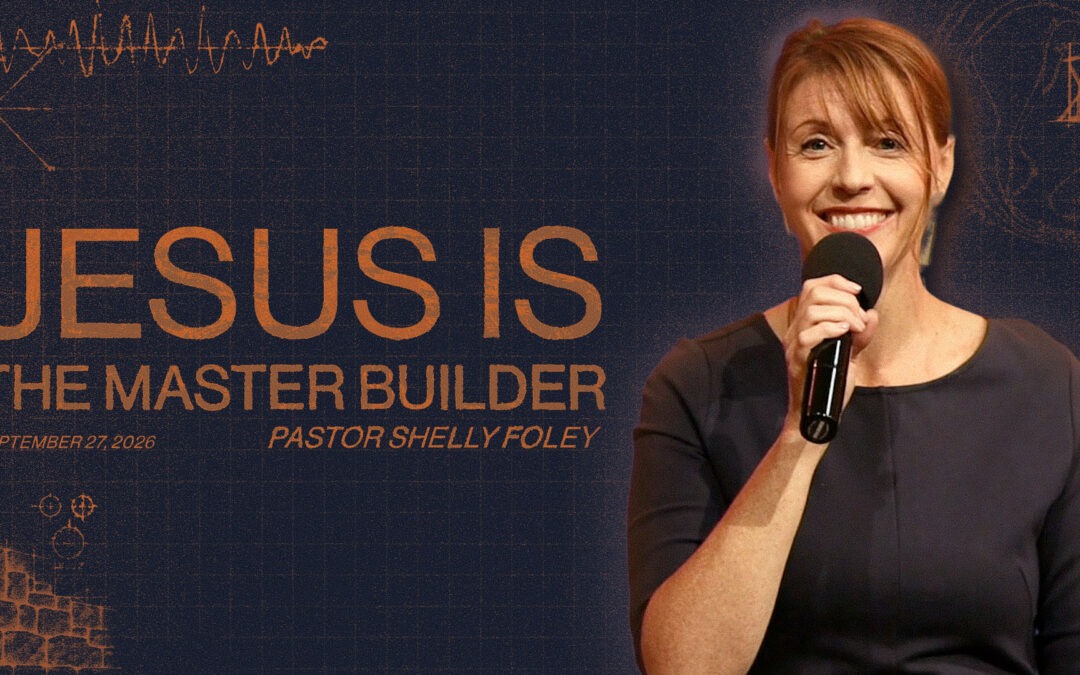
In the opening message of His Church Under Construction, Pastor Shelly Foley teaches from Matthew 16 that Jesus is the Master Builder of His church.
Before Jesus tells His disciples what He is going to build, He asks them, “Who do you say that I am?” This establishes the proper order: revelation of Jesus comes before mission, ministry, or activity.
Jesus then declares, “I will build My church.” The church belongs to Him. He is the Builder, Owner, Foundation, Cornerstone, Head, and Standard. Although His church is made up of imperfect people who are still being shaped, the failures of human builders do not cancel the promise of the Master Builder.
Jesus also invites His people to participate in what He is building. He retains ownership but entrusts His followers with responsibility. Our response is to surrender to Him and faithfully participate by learning to pray, invite, disciple, and multiply.
For Full Transcript…
00:00:01:06 – 00:00:01:17
Unknown
you know.
00:00:01:18 – 00:00:40:22
Unknown
Todd. Yvonne. Oh my gosh, Lisa. Anastasia. Mean, these people brought such power for words. Ruth. Oh oh my goodness. To every dancer and musician, it was, it was truly, a worship to the Lord. Amen. So. All right, you guys, we are back today. And today I get the privilege to launch our new series. Yeah, our new series is called His Church under construction.
00:00:40:22 – 00:01:01:03
Unknown
Is our the one without my subtitle. Can we put that one up there first? Sorry, cuz I got a few things to say about the series first, before we get into that, or just clear that master builder part. Yeah, there we go. We’re going to get there. Maybe. Maybe we’re going to get there. That’s okay.
00:01:01:05 – 00:01:12:22
Unknown
So over the next several weeks, we are going to spend some time talking about the church.
00:01:12:25 – 00:01:23:17
Unknown
Okay. We’re going to try to understand what Jesus says about his church.
00:01:23:19 – 00:01:37:15
Unknown
And I want to challenge us, especially those of us who have maybe been in church a minute or two, or way more than that.
00:01:37:17 – 00:01:48:29
Unknown
To allow the Lord to challenge what we think we know about church.
00:01:49:01 – 00:02:20:18
Unknown
Because I believe that there are a lot of things that we think we know about church that isn’t actually what Jesus says church is. And we as culture have created it to be. Does that make sense? And I believe he’s calling us into a season of really recognizing what he says his church is supposed to be.
00:02:20:20 – 00:02:25:04
Unknown
And letting us, like, unwind.
00:02:25:06 – 00:02:30:23
Unknown
The things, the pressure.
00:02:30:25 – 00:02:35:06
Unknown
That we put on ourselves.
00:02:35:08 – 00:03:05:21
Unknown
About what church is supposed to be because we’re talking about the church because it’s what Jesus is building. We’re going to be talking about why it matters. We’re going to talk about how we participate through discipleship, evangelism, leadership, multiplication, church planting, unity.
00:03:05:23 – 00:03:13:12
Unknown
So we’re going to spend the next 10 or 11 weeks.
00:03:13:14 – 00:03:30:19
Unknown
Talking about the church. Now, let me be clear. Not because we’re trying to build a bigger organization, okay? Not because we need another church initiative, because we’re not busy enough.
00:03:30:21 – 00:03:38:15
Unknown
Not because we need something to preach about until Christmas.
00:03:38:18 – 00:04:20:10
Unknown
The church matters because it deeply matters to Jesus. And that is why we’re going to spend the time talking about his church, his church under construction. You see, when Jesus walked the earth, he said a lot of really remarkable things. But one of the most remarkable statements, I think, that he ever made. He said, I will build my church.
00:04:20:12 – 00:04:52:29
Unknown
This means that church wasn’t man’s idea. It wasn’t Peter’s idea. It wasn’t the apostles idea. It wasn’t a dominant idea. The church was and is Jesus’s idea. Period. That world word build really matters. You see, Jesus did not speak about the church as something accidental.
00:04:53:02 – 00:05:01:12
Unknown
But as something intentionally constructed according to a design.
00:05:01:14 – 00:05:08:26
Unknown
No builder just starts building without a design, no real builder.
00:05:08:28 – 00:05:15:17
Unknown
Maybe our four year olds and we see how that goes.
00:05:15:20 – 00:05:28:27
Unknown
But who’s ever driven past a construction site? Maybe a new building being built, a home? Can I just say that it rarely looks impressive when it’s in process?
00:05:29:00 – 00:05:47:03
Unknown
When it’s in the middle of the project? It looks messy. There’s dirt and equipment everywhere. There’s exposed framing. There’s unfinished work everywhere. There’s tools scattered.
00:05:47:06 – 00:05:53:04
Unknown
Often it looks messy. Before it looks beautiful.
00:05:53:07 – 00:06:20:19
Unknown
But when you know who’s building that house or who is building that building, and maybe you’ve even seen the plans, you can begin to recognize what it might be coming. I know for me, sometimes I drive back and I’m like, wonder what that’s going to be? I wonder what that’s supposed to be. All I see is concrete or all I see is pile of dirt.
00:06:20:22 – 00:06:54:14
Unknown
Big machinery. What’s that supposed to be? But when we get a glimpse of the architectural mockup, or we see the plans, we can begin to really understand what it is going to become. So in the church, Jesus said, I will build my church. Not I might build it. Not I’d like to build it, but I hope it survives.
00:06:54:16 – 00:07:32:25
Unknown
I will build my church. You see, we live in a time in a culture where there are a lot of opinions about church. Some people love the church. Some people are skeptical of the church. Some people have walked away from the church. Others have been wounded by the church. Some people have spent decades faithfully serving in the church.
00:07:32:28 – 00:08:09:18
Unknown
And if we’re honest, all of these experiences shape the way we hear the word church. So some of us were really excited when I said, we’re talking about the church for the next ten weeks. And some of us were like, oh, because our experience with our cultural reference of church frames our mindset, our belief system, our emotions attached to the word.
00:08:09:21 – 00:08:15:17
Unknown
But before we decide what the church means to us.
00:08:15:19 – 00:08:24:17
Unknown
I want to challenge us. What does it mean to Jesus?
00:08:24:20 – 00:08:40:22
Unknown
Because we should be aligning our thought processes, our opinions, our perspectives to what Jesus says about the church.
00:08:40:25 – 00:08:47:16
Unknown
So what does the church mean to Jesus?
00:08:47:18 – 00:08:51:26
Unknown
I think it means everything to him.
00:08:51:29 – 00:09:11:05
Unknown
Because it’s his. And when something is yours, you want to take care of it and you want it to grow and you want it to succeed. Right? The church matters to Jesus.
00:09:11:07 – 00:09:51:05
Unknown
So today, let’s see where Jesus begins, because we see Jesus as the master builder. So for our first week in this series, we’re going to talk about this. Jesus is the master builder. You see, the word church or ecclesia in Greek appears more than 100 times in the New Testament, 144 to be exact, but Jesus only uses it in two passages, three times total and two passages.
00:09:51:07 – 00:10:36:00
Unknown
The rest of the word church Ecclesia is broken down by Paul and the apostles. It first occurs in Matthew 1618, says he establishes the foundations not yet for understanding his church. When he references the word church, he says, I will build my church. Culturally, ekklesia did not mean a church building. If you said the word ekklesia in the day Jesus said it, it would not mean this.
00:10:36:02 – 00:11:08:12
Unknown
Right? But they actually knew what it meant because it was the assembly or gathering of people together. Most of the time, politically, they would gather. There’s lots of history on that. You can do a lot of great studies on it. It was used for non-Christian public assemblies all the time. It’s what it was referenced. So when Jesus says, I will build my ekklesia, the picture is not primarily that I’m going to construct a religious institution or a religious building.
00:11:08:17 – 00:11:19:09
Unknown
It was an I will form, I will gather a people who belong to me.
00:11:19:12 – 00:11:30:18
Unknown
Jesus is not merely building something for us. He is building a people who are his.
00:11:30:20 – 00:11:56:07
Unknown
This is a really important piece that we have to understand. So let’s go ahead and go. Matthew 16. We want to read this whole passage. I want to start in verse 13 to see really, when Jesus introduces the word church for the first time. What the heck is he talking about? Right? So we could really understand the foundation that Jesus is laying.
00:11:56:09 – 00:12:30:05
Unknown
Verse 13 says, When Jesus came into the region of Caesarea Philippi, he asked his disciples, saying, who do men say that I, the Son of Man, am? So they said, some say John the Baptist, some Elijah, others Jeremiah, or one of the prophets. And then he said to them, but who do you say that I am? And Simon Peter answered and said, you were the Christ, the son of the living God.
00:12:30:07 – 00:12:53:20
Unknown
Jesus answered him and said, blessed are you, Simon bar Jonah, for flesh and blood has not revealed this to you, but my father who is in heaven. And I also say that you are Peter. And on this rock I will build my church, and the gates of Hades shall not prevail against it. And I will give you the keys of the kingdom of heaven.
00:12:53:20 – 00:13:05:12
Unknown
And whatever you bind on earth will be bound in heaven, and whatever you loose on earth will be loosed in heaven. So here we are.
00:13:05:15 – 00:13:37:06
Unknown
Jesus beginning to establish the church. So our first point for today is who do you say I am? Jesus is establishing the foundation before he explains what he was building or what he was going to build. He asked a question on which everything else depended.
00:13:37:09 – 00:14:12:04
Unknown
Who do people say the Son of Man is? You see, the disciples immediately started listing the opinions of everybody around them John the Baptist, Elijah, one of the prophets. Everyone had an opinion about who Jesus was. And everyone considered him somewhat significant. They couldn’t deny what he was doing, but the issue was not whether or not Jesus was important, it was whether or not they recognized him for who he truly was.
00:14:12:07 – 00:14:30:05
Unknown
And I would say that’s true in our culture today. I don’t think many actually deny the importance of Jesus. But do they really understand and recognize him for who he truly is?
00:14:30:08 – 00:14:56:18
Unknown
So then Jesus turns and he makes this a very personal question to the disciples. And he says, well, who do you say I am? You give me a lot of answers, none of which are you? So who do you say I am? And he’s talking to all of the disciples. Silence! I could just see it now, right? You know that teacher who asks the question and nobody wants to answer, and you’re like, okay, do I have to call on somebody?
00:14:56:20 – 00:15:02:02
Unknown
Right. So Peter steps up.
00:15:02:05 – 00:15:19:07
Unknown
Because eventually faith can no longer live on borrowed opinions.
00:15:19:09 – 00:15:27:13
Unknown
Other people’s opinions. Other people’s faith is not enough.
00:15:27:16 – 00:15:33:06
Unknown
For me, is not enough for you.
00:15:33:08 – 00:15:49:04
Unknown
So eventually, when Jesus asks this question to his disciples and is asking this question to us, who do you say that I am? Nobody else’s opinion matters.
00:15:49:06 – 00:16:22:22
Unknown
You must have the revelation of Christ. It doesn’t matter what your spouse says things. It doesn’t matter what your parents say or think. Your grandparents, your coworkers. It does not matter because faith can no longer live on borrowed opinions. We must be firm in who Christ is in us first. You see, Peter in the disciples couldn’t stand on what the crowds, the culture, or the religious leaders believed.
00:16:22:23 – 00:16:44:27
Unknown
They had to answer to Jesus for themselves. So what did Peter say? He said, you are the Christ, the son of the living God. You know Peter right there. He’s identifying him as the promised Messiah. Now, this was a pretty big deal in their culture.
00:16:44:29 – 00:17:19:03
Unknown
He was announcing him as the anointed king of Israel that they’d been waiting for for thousands of years. He announced him as the son of the living God, not just sent by God, not just speaking for God, but the son of the living God. And he announced it in this region filled with pagan worship, completely competing claims to power.
00:17:19:05 – 00:17:29:14
Unknown
He says, you are the son of the living God. I don’t care what surround us. I know who you are.
00:17:29:16 – 00:17:37:27
Unknown
And Jesus’s response in verse 17. Blessed are you, Simon, son of Jonah.
00:17:37:29 – 00:17:50:01
Unknown
For this was not revealed to you by flesh and blood, but by the father in heaven. See, Jesus does not congratulate Peter for figuring it out.
00:17:50:03 – 00:18:14:15
Unknown
He points to the source, the father who revealed it, that word revealed means to uncover, to reveal something that was hidden. See, Peter didn’t just discover Jesus.
00:18:14:18 – 00:18:28:27
Unknown
God revealed Jesus. That’s different. See, everything changes when Christ is revealed.
00:18:29:00 – 00:18:40:06
Unknown
Not when information is uncovered or education or not. Not because we have good attendance.
00:18:40:08 – 00:19:23:14
Unknown
But revelation changes everything. You know, Peter had walked with Jesus. He had listened to Jesus. He’d spent a lot of time watching him. But now he saw him for who he truly was. Everything Jesus says about his church flows from this revelation. Notice the order before Jesus reveals the church before he reveals a mission, the responsibility. He reveals himself.
00:19:23:16 – 00:19:51:28
Unknown
Before he tells them what he was going to build or what they were going to carry, or what they were going to do. They had to see him and see him clearly. Jesus comes first before the church, before the mission, before our part, and everything else flows from the revelation of who he is.
00:19:52:00 – 00:20:00:29
Unknown
We have to understand this so often we get it backwards.
00:20:01:02 – 00:20:17:28
Unknown
Just come on, get involved. Just. Just do stuff and you’ll get a revelation of Christ on the way. That’s not what Jesus did.
00:20:18:00 – 00:20:24:19
Unknown
I told you. Some of us are going to have to unwind a few things.
00:20:24:21 – 00:20:32:26
Unknown
Some defending, some things that aren’t Jesus.
00:20:32:28 – 00:21:12:26
Unknown
And start saying Jesus is the first, the most important. The priority before anything else is Jesus, and everything flows from Jesus. Jesus is the source of life. Jesus is the one who came to give his life for us so that he could build the church, but he is first and foremost Jesus first. Everything else second. You see, it was only after Peter saw Jesus clearly that Jesus could even reveal to him what he was going to build, because they’re not separate.
00:21:12:28 – 00:21:20:23
Unknown
They’re not apart. He says, I will build my church.
00:21:20:25 – 00:21:40:16
Unknown
But he was building it from the place of Jesus first, and then everything flows. So our second point today is that Jesus is the builder.
00:21:40:19 – 00:22:21:13
Unknown
I will build my church. You see, that word I will build is an action and future tense word. Jesus is not describing what the church might become. He is committing himself to doing it. The order still matters. First we see Jesus and who he is, and then we understand what he’s building. You see, the work begins with the revelation of the builder, not with our activity.
00:22:21:16 – 00:22:51:20
Unknown
Psalm 127, verse one says, unless the Lord builds the house, they labor in vain who build it. You know, the Psalm 127 does not say that no one is working. It’s not what it says. It just warns that sincere, exhausting labor can still be wasted if it’s disconnected from the Lord and his purposes and plans.
00:22:51:22 – 00:22:58:00
Unknown
It can be wasted if is disconnected from his purposes.
00:22:58:03 – 00:23:08:09
Unknown
Jesus is the builder, and he appoints laborers that must follow the plans.
00:23:08:12 – 00:23:28:19
Unknown
Accrue. Now, I’m not a construction person, as you know, but I’ve been around it a lot in my life, and I have been. When we were rereading our house a long time ago, I got really good at screwing off sheetrock. I don’t know if I could still do it, but, you know, you do what you got to do.
00:23:28:21 – 00:23:46:03
Unknown
I don’t know. Okay, John, that’s correcting me. I thought I got really good. He said I didn’t get really good, but in my estimation of things from where I started to where I got, I got really good at screwing up. Shirak.
00:23:46:06 – 00:23:54:08
Unknown
But I remember this one moment that I did the whole row and didn’t find one stud.
00:23:54:11 – 00:23:59:12
Unknown
It was like early in my learning.
00:23:59:14 – 00:24:23:00
Unknown
And I had to undo every single screw. And I’m. The problem was, it was like I kind of had it because I like felt it, but it was like the edge. So it wasn’t like really secured. Right. So a lot of you maybe know what I’m talking about. So I had to undo it because I didn’t follow the line that was drawn for me.
00:24:23:02 – 00:24:48:07
Unknown
Should have been a pretty simple task. Me and lines are not necessarily. It’s fine. And I had to undo this whole row. It felt like a really big piece of sheetrock. I don’t know if it really was, but it felt like a really big piece of sheet rock. Band did undo every single one. Jonathan probably remembered. Or maybe he doesn’t, because I screwed up a lot of things.
00:24:48:09 – 00:25:24:07
Unknown
I was not experienced in this, but I was working really, really hard and I was working really, really hard, ineffectively. And that is what this scripture I believe is talking about, right? Unless he builds it, unless we are following the plans of the builder, we can do a lot of ineffective things. Sweat a lot. Burn a lot of calories.
00:25:24:11 – 00:25:36:20
Unknown
Waste a lot of time and things that he is not building.
00:25:36:22 – 00:25:43:23
Unknown
I believe a crew can even be sincere, experienced.
00:25:43:25 – 00:26:16:03
Unknown
They can work hard, but that doesn’t automatically produce right work. Sincerity does not make the wall plumb. Now, I think the contractor picture is helpful here, but Jesus is way more than a general contractor. Can I just say he’s the architect. He’s the builder. He’s the owner. He’s the foundation. He’s the cornerstone. He’s the head. He’s the standard.
00:26:16:05 – 00:26:44:18
Unknown
He is the boat. Both the one who builds and the cornerstone around whom the structure is built. He is the one we align to. Scripture gives us both sides of the picture as well. We are fellow workers participating in the Christ, what Christ is building, and we are living stones that he is fitting together. Paul describes us as God’s fellow workers, while making it clear that Jesus is the only foundation.
00:26:44:18 – 00:27:13:00
Unknown
First Corinthians three nine it says, for we are God’s fellow workers. You are God’s field. You are God’s building according to the grace of God which was given to me. As a wise master builder, I have laid the foundation and another build on it. But let each one take heed how he builds, for no other foundation can anyone lay then that which is laid, which is Jesus Christ.
00:27:13:03 – 00:27:49:10
Unknown
Peter also takes this picture further. In first Peter two he says, you are coming to Christ, who is the living cornerstone of God’s temple. He was rejected by people, but he was chosen by God for great honor. And you are living stones that God is building into his temple. Notice the order again we come to Christ, the living cornerstone, and then he builds us into his spiritual house.
00:27:49:13 – 00:28:40:18
Unknown
We come to Christ first. He builds us together. Christ isn’t just building a building. He’s building people into a habitation of God. That is what the church is. People built into a habitation of God, where God can dwell. And the funniest part about it is the church is made up of people. The habitation of God is made up of imperfect, still in process, people still being shaped by the builder.
00:28:40:20 – 00:28:48:09
Unknown
People with histories and wounds and weaknesses.
00:28:48:12 – 00:28:57:18
Unknown
And the capacity to fail each other. I know for me.
00:28:57:21 – 00:29:09:06
Unknown
It’s often easier to criticize the construction construction than to submit to the builder myself.
00:29:09:08 – 00:29:17:27
Unknown
I’ve seen mess more clearly than I’ve seen Jesus.
00:29:17:29 – 00:29:22:19
Unknown
I’ve been wounded by wounded people.
00:29:22:21 – 00:29:28:13
Unknown
And I have wounded others out of my own pain.
00:29:28:15 – 00:29:51:07
Unknown
But let me be really clear. Being under construction is not an excuse for anything goes. It is not permission to hold grudges either, or remain unchanged. It means we stay accountable to the plans and responsive to the builders. Correction.
00:29:51:09 – 00:30:02:12
Unknown
The church is made up of a whole bunch of shaped, still being shaped people, including me.
00:30:02:14 – 00:30:35:29
Unknown
And the failures of human builders. Do not cancel the promise of the master builder. Hear me? The failures of human builders do not cancel the promise of the master builder. This is something we have to understand. This is why it is so important that it is Christ first. Because if it is church first, the failures of human builders will cancel the master builder.
00:30:36:01 – 00:31:12:09
Unknown
Because whatever is first is priority. So when Christ is first, we can understand that I am a part of lots of people that are in process and failures. Do not cancel what God is doing, and I can walk with love and grace and mercy and walk in healing and restoration, because he is the master builder and his plans are greater than the failures of the ones that build.
00:31:12:11 – 00:31:30:02
Unknown
This is why it’s important to understand the correct order to see it right. Jesus is not finished with his church.
00:31:30:05 – 00:31:40:03
Unknown
He is not finished, but it is his church.
00:31:40:05 – 00:31:57:09
Unknown
So as we go on into that scripture where it says, Jesus said, I will build my church, he is saying that I am the owner. This is my church.
00:31:57:11 – 00:32:01:07
Unknown
It belongs to me.
00:32:01:10 – 00:32:34:18
Unknown
Because the church belongs to Jesus. We cannot understand his church apart from knowing him. Hear me. We cannot truly understand his church. Apart from knowing him, he determines the vision. He determines the standards. He determines the priorities and the mission and the measurements. A worker does not get to redesign the builder building. The owner determines what gets built.
00:32:34:20 – 00:32:43:11
Unknown
You know, church culture often asks, what do I want in a church?
00:32:43:14 – 00:32:57:10
Unknown
But Matthew 16 asks, What is Jesus building? Those are not the same question.
00:32:57:13 – 00:33:19:01
Unknown
Like I said, some of us need to let Jesus dismantle the version of church that we have built from our own preferences, our own traditions, our own disappointments, our wounds, so that he can show us his church again.
00:33:19:03 – 00:33:42:13
Unknown
Because the church belongs to Jesus. It does not belong to a pastor. It does not belong to a member. It does not belong to a tradition. It does not belong to a board. It belongs to Jesus. He gets the final word.
00:33:42:15 – 00:33:47:09
Unknown
It is his church.
00:33:47:12 – 00:34:19:23
Unknown
The church has pastors. Yes, but one head. The church has leaders. Yes, but one owner. The church has builders. Absolutely. But one master builder. You see, there’s there’s differences between being disappointed by people in the church and deciding that we can disregard what belongs to Jesus.
00:34:19:25 – 00:34:37:03
Unknown
There is a difference between being disappointed by people in the church and deciding that we can disregard what belongs to Jesus.
00:34:37:06 – 00:34:47:01
Unknown
Belonging to Jesus also means the church must reflect Jesus.
00:34:47:04 – 00:34:58:14
Unknown
His church is not protection from accountability. It is the reason for accountability.
00:34:58:16 – 00:35:11:08
Unknown
The church must be made in the image of Christ.
00:35:11:10 – 00:35:15:00
Unknown
So often.
00:35:15:03 – 00:35:22:21
Unknown
We land on two sides of this.
00:35:22:23 – 00:35:29:06
Unknown
I don’t need the church. It’s just a bunch of people who are going to disappoint me.
00:35:29:08 – 00:35:40:17
Unknown
Or I absolutely need the church and I’m going to excuse everything about it because it’s his church.
00:35:40:20 – 00:35:57:03
Unknown
The church is accountable to Christ. The church is accountable to love. The church is accountable to not destroy. The church is accountable to bring healing, not wounding.
00:35:57:06 – 00:36:30:14
Unknown
But because it is full of imperfect people, it is going to sometimes do those things. But if it is truly the Church of Christ, it will be corrected. It will make adjustments. It will apologize. It will find restoration and healing so that we don’t have to come on the other side and say, I don’t need it because I’m I’m to hurt.
00:36:30:15 – 00:36:49:23
Unknown
It’s too painful. It’s his church. It must be built for his name, according to his word, upon his foundation and for his glory.
00:36:49:26 – 00:37:15:15
Unknown
That’s his church. So Jesus is the foundation, the builder, the owner. So why is he building his church? Number four. So that the gates of Hades will not prevail against it.
00:37:15:17 – 00:37:36:21
Unknown
This is the mission. You see, the church is not built merely to exist or preserve an institution. We’re not here to preserve 55 years.
00:37:36:24 – 00:37:41:02
Unknown
The church is built to reveal Christ.
00:37:41:04 – 00:38:23:05
Unknown
The church is built to advance his purposes. The church is built to carry his life into places ruled by sin and death. Ephesians three verse ten and 11 says to the intent that now the manifold wisdom of God might be made known by the church. Oh, wait a second. Back it up to the intent that now the manifold wisdom of God might be made known by the church.
00:38:23:08 – 00:38:53:03
Unknown
Yes. Might be made known by the church to the principalities and powers in the heavenly places, according to the eternal purpose which he accomplished in Christ Jesus our Lord. Come on. Paul says that through the church, God makes his wisdom known. Oh my gosh, that means we have to know his wisdom to be able to make it known to the principalities and powers.
00:38:53:06 – 00:39:10:14
Unknown
You know, it didn’t say make it known to the state of California. It didn’t say make it known to the county of even. It said he’s going to make the wisdom of God known to the powers and principalities in the heavenlies.
00:39:10:17 – 00:39:39:22
Unknown
This is important to you guys. So often we once again, we miss it and we gotta unwind. I gotta unwind. God’s challenging me, challenging us to unwind things and say impact in our community. May not look what you like. What a thing you think it should look like. Impact in our community means that you are the authority against the powers and principalities in this region.
00:39:39:25 – 00:40:14:06
Unknown
It may not look like the biggest church. As far as seats go, but it looks like the most impactful, powerful church. That is what it means. That is what God is building, and we’ve got to get it right. He is building a church that the gates of hell will not prevail against. He is sending us to the place where death is, that the death will not prevail.
00:40:14:08 – 00:40:41:24
Unknown
He chose the church to do this. You guys. He didn’t choose an individual. He didn’t choose jazz alone. Although he’s really good at it. He chose the church. He chose the church. Verse 18. In Matthew 16, I will build my church, and the gates of hell will not prevail against it.
00:40:41:27 – 00:41:08:15
Unknown
You see, Hades points to the realm and power of death. Jesus is declaring that death itself cannot overpower, cannot conquer, cannot imprison what he is building. This is the purpose, you guys. Death could not hold Jesus, and it will not have the final word over the church.
00:41:08:17 – 00:41:27:22
Unknown
Death won’t stop his church. Death won’t stop his kingdom. Death won’t stop his purpose. We are to prevail against every place of death.
00:41:27:24 – 00:41:42:24
Unknown
That’s a lot more than just physical death. Jesus doesn’t promise absence of opposition.
00:41:42:26 – 00:42:02:22
Unknown
When you’re going to war with death, there’s opposition. He promises no ultimate defeat. You see, Jesus is not building a church that barely survived.
00:42:02:24 – 00:42:06:22
Unknown
We all squeak through here.
00:42:06:24 – 00:42:21:17
Unknown
He is building a people who carry his life into places ruled by death.
00:42:21:20 – 00:42:48:16
Unknown
The church is participating in something so much bigger than itself. If we truly understand God’s purposes for us, if we truly understand his eternal purpose, what he’s trying to accomplish in Christ. It is so much bigger than butts and seats on a Sunday morning.
00:42:48:19 – 00:42:55:29
Unknown
It’s about being a people who are Christ first.
00:42:56:01 – 00:43:00:17
Unknown
Able to together.
00:43:00:19 – 00:43:15:03
Unknown
Overcome the gates of hell. Jesus promises I will build my church.
00:43:15:05 – 00:43:27:18
Unknown
And then he turns to his disciples and says, and then I’m going to give you the keys.
00:43:27:20 – 00:44:01:12
Unknown
He’s giving us an invitation. This is where the message all comes together. Jesus. He retains the ownership. It’s his church, but he delegates responsibility. He says, I will give you the keys. In verse 19 it says of Matthew says, I will give you the keys of the kingdom of heaven. And whatever you bind on earth will be bound in heaven, and whatever you loose on earth will be loosed in heaven.
00:44:01:15 – 00:44:15:14
Unknown
See, keys are used to unlock doors, to unlock gates. It represents access and authority. It’s a means of acquiring something.
00:44:15:16 – 00:44:57:09
Unknown
Keys imply access. They imply responsibility. They reply authority. They imply stewardship. You see, Jesus doesn’t transfer ownership of his church, but he does entrust his people with responsibility in his kingdom. Now, I don’t know about you, but I don’t give my keys to just anybody, especially something that I like. That’s really important to me. An owner gives keys because he trusts them, because he wants them to be involved.
00:44:57:11 – 00:45:02:23
Unknown
He wants to give them full access.
00:45:02:25 – 00:45:11:09
Unknown
He builds his church and he entrusts us with part of the work.
00:45:11:11 – 00:45:16:01
Unknown
Jesus owns. We participate.
00:45:16:04 – 00:45:52:21
Unknown
You see, we have to be careful, though, because two errors can follow if we lose this balance. Okay? If we act as though we own the church. Preferences become authority and control replaces surrender. And protecting our territory matters more than advancing his kingdom. If we act as though we own the church.
00:45:52:24 – 00:46:21:13
Unknown
Preference becomes authority. Control replaces surrender, and protecting our territory matters more than advancing his kingdom. But if we act, the other error. If we act as though we carry no responsibility, we settle into passive, passive spectatorship.
00:46:21:15 – 00:46:26:12
Unknown
Consumer. Christianity.
00:46:26:14 – 00:46:36:28
Unknown
Both our problem. Jesus gives us neither ownership nor permission to stand back.
00:46:37:00 – 00:47:02:00
Unknown
Christ owns. We participate. Matthew 1619 focuses on delegating stewardship. We’re not independent contractors building personal kingdoms. We are stewards entrusted with the owner’s keys.
00:47:02:02 – 00:47:21:20
Unknown
The church belongs to Jesus. He has placed keys in the hands of his people. Then the question is not whether we matter in the work. The question is whether we will fully steward the part that he’s given us.
00:47:21:23 – 00:47:41:03
Unknown
So what is our part? As we move through this series over these next weeks, we’re going to keep coming back to forwards. Pray, invite, disciple and multiply.
00:47:41:06 – 00:47:49:19
Unknown
These are not for more church programs or obligations.
00:47:49:22 – 00:48:19:16
Unknown
I think we have that. I did have that. You sure it’s at the end? Pray. Invite. Disciple. Multiply. Say it again. Because it’s not up there. Pray. Invite. Disciple. Multiply. These are simple ways that we join Jesus and what he is already doing, and take responsibility for the keys that he’s placed in our hands. So what’s our part?
00:48:19:17 – 00:48:57:04
Unknown
Pray. We pray because we cannot build his church without his presence, his direction, his power. Builders need to hear the builder. We invite. We invite because Jesus is still seeking, saving and gathering people to his family. And he calls us to bring people closer. We disciple because Jesus is forming people who know him, who follow him, who obey him and become more like him.
00:48:57:07 – 00:49:33:22
Unknown
We multiply because what Jesus built is meant to grow. See disciples, make disciples, leaders raise leaders, ministries, reproduce churches, plant churches. This is the church Jesus is building, not a building to maintain, but a people being formed and sent. So we are asking him to show us how have we settled for watching?
00:49:33:24 – 00:49:38:02
Unknown
Where do I need to surrender?
00:49:38:05 – 00:49:42:24
Unknown
Where is he calling us to step into?
00:49:42:26 – 00:50:16:13
Unknown
Some of us. We need to let Jesus rebuild. What disappointment, hurt or preferences have made the church up to be in our minds? Some of us have stayed on the edges long enough, and Jesus is inviting us to step into what he’s doing, and all of us need to keep our eyes on him.
00:50:16:16 – 00:50:59:15
Unknown
None of us begins with tasks. It all begins with the question Jesus asked, who do you say I am? Because we cannot faithfully participate in what he’s doing. If we lose sight of the one who is doing the building, the work belongs to Jesus. Our first response must be surrender. And from that surrender we answer his invitation.
00:50:59:17 – 00:51:03:18
Unknown
Amen. Amen.
00:51:03:21 – 00:51:26:13
Unknown
Amen. I’m excited. Are you excited? Alright, well, we’re going to close the service out here in prayer. I want to throw a final invite out. We introduce being filled with the Holy Spirit, and if you have any questions on what that really is and how to do that, you can hang out after ask those questions, we can pray with you or however you’d like to go.
00:51:26:19 – 00:51:46:15
Unknown
Lots of people. We’re going across the parking lot to something we call fellowship where there’s food there. We’d love to have you join us. Fill that stomach of yours while asking, you know, finding out people’s stories and hearing more about what God is doing. So let’s pray. Father, we thank you. We thank you for this incredible word today.
00:51:46:18 – 00:52:06:04
Unknown
Thank you for giving us voices that can articulate and bring father clarity to your plan, your purpose. And we just ask that you would continue to stir our hearts and help us understand our place in this hour and in this time, so that your church is built. God, we love you and we thank you for this. In Jesus name.
00:52:06:06 – 00:52:46:17
Unknown
Amen. Amen.
His Church Under Construction
Pastor Shelly Foley
The church matters deeply to Jesus.
That is the starting point for understanding what the church is, why it exists, and what our place within it should be.
When Jesus spoke about the church, He made an extraordinary declaration:
“I will build My church.”
— Matthew 16:18
The church was not Peter’s idea. It was not the apostles’ idea. It was not something humanity invented and Jesus later decided to bless.
The church was and is Jesus’ idea.
And when Jesus says He will build His church, He speaks intentionally. A builder works according to a design. There is a plan, a foundation, and a purpose.
Construction, however, rarely looks impressive while it is happening.
There is exposed framing. Dirt. Equipment. Unfinished work. Tools scattered everywhere.
Often, it looks messy before it looks beautiful.
The same can be true of the church.
The church is made up of people who are still being shaped, healed, corrected, and formed. Yet our confidence is not found in the perfection of the people involved in the construction.
Our confidence is in the Master Builder.
Before We Understand the Church, We Must See Jesus
In Matthew 16, before Jesus ever tells His disciples what He is going to build, He asks them a question:
“Who do you say that I am?”
The disciples first tell Jesus what everyone else is saying.
Some say John the Baptist. Some Elijah. Others Jeremiah or one of the prophets.
Everyone had an opinion about Jesus.
But Jesus made the question personal.
Who do YOU say that I am?
Eventually, faith cannot live on borrowed opinions.
It is not enough to know what your parents believe, your spouse believes, your pastor believes, or the people around you believe. Peter had to answer Jesus for himself.
Peter responded:
“You are the Christ, the Son of the living God.”
Jesus then explained that Peter had not simply figured this out intellectually. The Father had revealed it to him.
That distinction matters.
Peter had already walked with Jesus. He had heard Jesus teach. He had watched Him minister.
But now Peter saw Him for who He truly was.
Everything Jesus says next about His church flows from that revelation.
Before Jesus revealed the church, the mission, or the responsibility, He revealed Himself.
That order still matters.
Jesus comes first.
Before church.
Before ministry.
Before our assignment.
Before our activity.
Everything else flows from knowing Him.
We often reverse the order. We tell people to get involved, serve, participate, and stay busy, hoping they discover Jesus somewhere along the way.
But Jesus begins with revelation.
The work begins with seeing the Builder.
Jesus Is the Builder
Jesus did not say, “You will build My church.”
He said:
“I will build My church.”
Psalm 127:1 says:
“Unless the Lord builds the house, they labor in vain who build it.”
That Scripture does not mean nobody is working.
It means we can work incredibly hard and still accomplish very little if our work is disconnected from what God is actually building.
Sincerity alone does not guarantee that we are building correctly.
Hard work does not automatically produce right work.
Pastor Shelly shared the picture of working on sheetrock and realizing that an entire row of screws had missed the stud. There had been real work. There had been real effort. But eventually, all of it had to be undone because it was not aligned with the line that had been established.
The same thing can happen spiritually.
We can expend energy, time, and resources on things God never asked us to build.
That is why we have to keep returning to the Builder and His plans.
Jesus is more than a general contractor.
He is the Architect.
He is the Builder.
He is the Owner.
He is the Foundation.
He is the Cornerstone.
He is the Head.
He is the Standard.
We do participate in His work, but we participate according to His design.
He Is Building People
The Greek word ekklesia, translated “church,” described an assembly or gathering of people.
So when Jesus said, “I will build My church,” the primary picture was not the construction of a religious building.
Jesus was saying that He would gather and form a people who belong to Him.
First Peter 2 describes believers as living stones being built together into a spiritual house.
The church, then, is not simply a place we attend.
It is a people God is forming into a habitation for His presence.
And those people are still under construction.
They have histories.
They have wounds.
They have weaknesses.
They have the ability to disappoint one another.
Sometimes we have been wounded by wounded people.
Sometimes, out of our own pain, we have wounded others.
But being “under construction” does not mean anything goes.
It does not remove accountability.
It means we remain responsive to the Builder’s correction.
We allow Jesus to continue shaping us.
And we remember this:
The failures of human builders do not cancel the promise of the Master Builder.
Jesus is not finished with His church.
It Is His Church
Jesus said:
“I will build My church.”
That word My changes everything.
The church belongs to Jesus.
It does not belong to a pastor.
It does not belong to a member.
It does not belong to a board.
It does not belong to a tradition.
It belongs to Jesus.
Because He owns it, He determines its vision, priorities, mission, standards, and measurements.
Church culture often asks:
“What do I want in a church?”
Matthew 16 asks a different question:
“What is Jesus building?”
Those are not the same question.
Sometimes we have to allow Jesus to dismantle versions of church we have constructed from our preferences, traditions, disappointments, and wounds so that He can show us His church again.
His church must reflect Him.
That also means belonging to Jesus is not protection from accountability. It is the reason for accountability.
The church is accountable to Christ.
It is accountable to love.
It should bring healing rather than destruction.
And when the church gets something wrong, a church submitted to Christ should be willing to be corrected, make adjustments, apologize, seek restoration, and pursue healing.
The church has pastors, but one Head.
The church has leaders, but one Owner.
The church has builders, but one Master Builder.
The Gates of Hell Will Not Prevail
Jesus then declares:
“I will build My church, and the gates of Hades shall not prevail against it.”
The church was not created simply to preserve an institution.
The church was built to reveal Christ.
It was built to advance His purposes and carry His life into places ruled by sin and death.
Ephesians 3 says that through the church, the manifold wisdom of God is made known even to principalities and powers.
That means the mission of the church is much bigger than attendance.
It is bigger than filling seats on Sunday.
Jesus is building a people through whom His life and His kingdom confront places dominated by death.
Death could not hold Jesus, and death will not have the final word over what He is building.
Jesus does not promise that there will never be opposition.
He promises that opposition will not have the ultimate victory.
He is building a people who carry His life into places ruled by death.
Jesus Owns. We Participate.
After declaring, “I will build My church,” Jesus says:
“I will give you the keys of the kingdom of heaven.”
Keys represent access, authority, responsibility, and stewardship.
Jesus does not transfer ownership of His church to us.
But He does invite us to participate.
Jesus owns. We participate.
Losing that balance creates two dangers.
If we act as though we own the church, our preferences become authority, control replaces surrender, and protecting our territory becomes more important than advancing His kingdom.
But if we act as though we have no responsibility at all, we become spectators and consumers.
Jesus gives us neither ownership nor permission to stand back.
We are stewards entrusted with the Owner’s keys.
The question is not whether we have a place in His work.
The question is whether we will faithfully steward the part He has entrusted to us.
Pray. Invite. Disciple. Multiply.
As we participate in what Jesus is building, there are four simple responses:
Pray.
Invite.
Disciple.
Multiply.
We pray because we cannot build His church without His presence, direction, and power.
Builders need to hear the Builder.
We invite because Jesus is still seeking, saving, and gathering people into His family.
We disciple because Jesus is forming people who know Him, follow Him, obey Him, and become more like Him.
And we multiply because what Jesus is building is meant to grow.
Disciples make disciples.
Leaders raise leaders.
Ministries reproduce.
Churches plant churches.
Jesus is not merely building something for us to maintain.
He is building a people who are being formed and sent.
So we have to ask:
Where have I settled for watching?
Where do I need to surrender?
Where is Jesus asking me to step in?
Have disappointment, hurt, tradition, or preference shaped my understanding of the church more than Jesus has?
And above all, we return to the question where Jesus began:
Who Do You Say That I Am?
None of this begins with a task.
It begins with Jesus.
We cannot faithfully participate in what He is building if we lose sight of the One doing the building.
The work belongs to Him.
Our first response is surrender.
And from that surrender, we answer His invitation.
Jesus is the Master Builder.
It is His church.
And He is still building it.
Discussion Guide
Jesus Is the Master Builder
Pastor Shelly Foley
Summary
In the opening message of His Church Under Construction, Pastor Shelly Foley teaches from Matthew 16 that Jesus is the Master Builder of His church.
Before Jesus tells His disciples what He is going to build, He asks them, “Who do you say that I am?” This establishes the proper order: revelation of Jesus comes before mission, ministry, or activity.
Jesus then declares, “I will build My church.” The church belongs to Him. He is the Builder, Owner, Foundation, Cornerstone, Head, and Standard. Although His church is made up of imperfect people who are still being shaped, the failures of human builders do not cancel the promise of the Master Builder.
Jesus also invites His people to participate in what He is building. He retains ownership but entrusts His followers with responsibility. Our response is to surrender to Him and faithfully participate by learning to pray, invite, disciple, and multiply.
Icebreakers
- Have you ever built, remodeled, or repaired something? What happened when the project did not go according to plan?
- What is something that looks messy or unimpressive while it is being created but becomes beautiful once it is finished?
- When you hear the word church, what is one of the first things that comes to mind?
Discussion Questions
1. “Who do you say that I am?”
Read Matthew 16:13–17.
Why do you think Jesus asked His disciples what they believed about Him after first asking what everyone else was saying?
What is the difference between personally knowing Jesus and living on someone else’s understanding of Him?
2. “Faith can no longer live on borrowed opinions.”
Pastor Shelly emphasized that eventually our faith must become personal.
Are there areas where your understanding of Jesus has been shaped primarily by what other people have told you rather than by personally knowing Him?
What helps revelation move from information about Jesus to actually knowing Him?
3. Jesus comes first.
Pastor Shelly pointed out the order in Matthew 16: Jesus reveals Himself before He reveals the church, mission, or responsibility.
Why is this order important?
What can happen when church activity or ministry becomes more important than our relationship with Jesus?
4. “Unless the Lord builds the house…”
Read Psalm 127:1.
Can you think of a time when you worked very hard at something but later realized your effort was misdirected?
How can we discern whether something we are building or pursuing is actually aligned with what Jesus is building?
5. The church is still under construction.
Pastor Shelly said:
“The failures of human builders do not cancel the promise of the master builder.”
How can understanding the church as people who are still being shaped help us respond to disappointment?
How do we hold grace for imperfect people together with the need for accountability, correction, restoration, and healing?
6. “What do I want in a church?” versus “What is Jesus building?”
How are these two questions different?
Have preferences, traditions, disappointments, or wounds ever shaped your expectations of church?
What might Jesus want to rebuild or reshape in your understanding of His church?
7. Jesus owns. We participate.
Pastor Shelly describes two unhealthy extremes:
- Acting as though we own the church, causing preferences and control to take over.
- Acting as though we have no responsibility, resulting in passive or consumer Christianity.
Which side do you think is easier to fall into?
What would faithful stewardship look like for you right now?
Consider Pastor Shelly’s four responses:
Pray. Invite. Disciple. Multiply.
Which one is Jesus asking you to grow in during this season?
Closing Prayer
Jesus, You are the Master Builder, and the church belongs to You. Help us to see You clearly and to keep You first in everything we do. Where our understanding of Your church has been shaped more by preferences, traditions, disappointment, or hurt than by You, rebuild our perspective.
Teach us to follow Your plans rather than our own. Shape us as living stones into the people You have called us to be. Give us grace for one another, humility to receive correction, courage to pursue healing and restoration, and faithfulness to steward what You have placed in our hands.
Show us how to pray, invite, disciple, and multiply as we participate in what You are already building.
May Your church reflect Your heart, carry Your life, advance Your kingdom, and bring You glory.
In Jesus’ name, amen.